
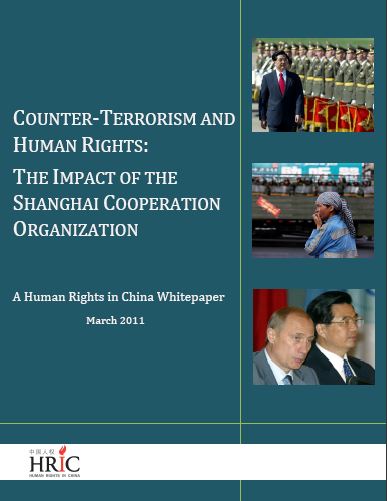
Counter-terrorism and human rights: the impact of the Shanghai Cooperation Organization
-
 Writen byHRIC
 - PublisherHuman Rights in China
- Year
This book explores the complex intersection of counter-terrorism strategies, preventive detention, and international human rights law. It critically examines the practice of detaining suspected terrorists without trial, evaluating the tension between national security imperatives and the protection of individual freedoms. The text highlights the legal and ethical challenges posed by preventive detention, assessing its alignment with international human rights standards. It also explores alternative approaches to addressing radicalization and terrorism, promoting the balance between effective security measures and safeguarding fundamental rights. Throughout the world, terrorism continues to pose major threats to peace, security, and stability. Since September 11, 2001, intensified counter-terrorism debates and responses, including national, multilateral, and regional approaches, have been marked by trends posing complex challenges to the protection of international human rights and fundamental freedoms. The current normative international framework and consensus clearly recognize that respect for human rights is not only the legal and moral obligation of states, but an essential pillar in the promotion of sustainable and effective counter-terrorism approaches. Yet, human rights violations related to and resulting from counter-terrorism measures continue; at the same time, there is push-back in the international community against those measures that violate human rights, such as extraordinary rendition, secret detentions, and torture and other inhumane treatment and abuses prohibited by jus cogens norms. Within this international counter-terrorism framework, the role of regional organizations in the promotion of international peace and security is accorded special recognition and legitimacy, in light of these organizations' presumed local experience and expertise. This whitepaper examines one such regional organization in operation since 2001: the Shanghai Cooperation Organization (SCO), comprising the People's Republic of China, the Russian Federation, Kazakhstan, Kyrgyzstan, Tajikistan, and Uzbekistan. While the SCO facilitates multilateral cooperation among its members in a variety of fields, including the economy, cultural exchange, and health initiatives, this whitepaper focuses on the SCO framework for security and counter-terrorism measures and the key role of China in that framework; identifies the human rights concerns raised by SCO structure, policies, and practices; and analyzes the SCO's impact on international human rights norms and standards and on the international counter-terrorism framework. This whitepaper analyzes aspects of the SCO that present fundamental challenges to the international community's efforts to ensure protection of human rights in counter-terrorism approaches, including within the UN Global Counter-Terrorism Strategy. SCO member states for their part have quite deliberately used this opportunity to advance their respective agendas on the international stage, under cover of the regional framework. Doing so has allowed them to deflect critical scrutiny of the serious human rights problems identified by international human rights monitoring bodies and thus avoid the need to account for them. With a view towards contributing constructively to promoting greater effectiveness and accountability of regional and international frameworks, this whitepaper offers a number of specific and concrete policy and practice recommendations directed to UN bodies, governments, civil society actors, and the SCO and its member states. To advance greater transparency of the SCO's structure, policies, and practices, this whitepaper also provides an extensive compilation of core documents and resources in the appendices. Human Rights in China hopes that this compilation of key SCO normative documents, publicly-available information on the activities of the organization, and analysis of these materials from an international human rights law perspective, will serve as a resource for generating real accountability within the SCO, and promoting a more constructive engagement between the SCO and the international community that contributes to advancing fundamental rights and freedoms in the region and in the world