
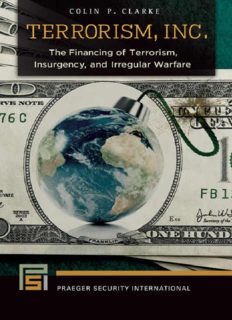
Terrorism, Inc.: The Financing of Terrorism, Insurgency, and Irregular Warfare
-
 Writen byColin P. Clarke Ph.D.
 - PublisherBloomsbury Academic,University of California Press
- Year2015
Terrorism, Inc. provides an in-depth analysis of the financing mechanisms behind terrorist organizations, insurgency movements, and irregular warfare. Through extensive research, Clarke identifies how financial networks support and enable global terrorism, and how these networks interact with transnational criminal enterprises. The book explores key financial channels, the role of state and non-state actors, and the global financial system’s vulnerabilities. Clarke also discusses countermeasures and policy recommendations for disrupting these financial flows, emphasizing the role of intelligence, enforcement, and international cooperation in combating the financing of terrorism. This in-depth, historical analysis of terrorism investigates the major funding streams of terrorists, insurgents, guerrillas, warlords, militias, and criminal organizations throughout the world as well as the efforts of the international community to thwart their efforts. Terrorist financing is an ongoing game of creating, concealing, and surreptitiously utilizing funds. This intriguing book considers every facet of guerrilla funding—from how activities are financed, to what insurgents do with the revenue they generate, to the range of countermeasures in place for deterring their moneymaking activities. Case studies prompt an analysis of past government responses and inform recommendations for countering irregular warfare worldwide. Author Colin P. Clarke presents the business side of terrorism, taking a look at the cash-producing ventures he labels "gray activities" such as diaspora support, charities, fraudulent businesses, front companies, and money laundering as well as "dark activities" including kidnapping for ransom, robbery, smuggling, trafficking, and extortion. He considers the transnational efforts to stop terrorist activities—from wiretaps and electronic surveillance to financial sanctions and the freezing of funds and accounts—and points to the emergence of interagency task forces for detaining and destroying the operations of major criminal organizations across the globe. Current Era Relevance: In the current global landscape, where terrorism continues to evolve and adapt, the book remains highly relevant. It emphasizes the importance of financial intelligence in the fight against terrorism and insurgencies, providing a critical understanding of how financial strategies are used to fund and fuel violence. In a world marked by increasing terrorist attacks, insurgencies, and transnational threats, dismantling these financial networks has become a key aspect of modern counter-terrorism strategies. The book is particularly timely given the growing use of digital currencies and unregulated financial channels that continue to pose challenges for counter-terrorism efforts. Community Engagement and Global Peace: The book is also relevant for community engagement programs that aim to increase awareness about how terrorism is funded. It can serve as an educational tool for local leaders and organizations in global peace-building efforts, allowing communities to understand the significance of disrupting financial flows to terrorist groups.