Countering/Preventing Radicalization through Education
-
 Writen by
 - PublisherUNESCO, United Nations Office of Counter-Terrorism, European Union
- YearOngoing (major frame
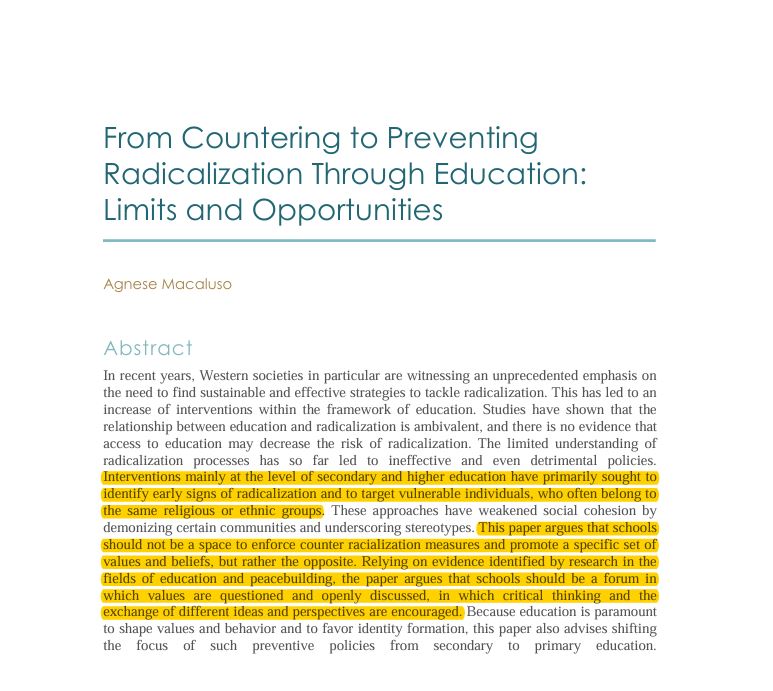
This resource area focuses on how education systems can play a central role in preventing radicalization and violent extremism. Global frameworks developed by organizations such as UNESCO emphasize that education is not only about knowledge transfer but also about shaping values, attitudes, and critical thinking skills that reduce susceptibility to extremist ideologies. Key approaches include integrating peace education, global citizenship education (GCED), and media literacy into curricula. These approaches help learners critically assess information, resist propaganda, and engage constructively in diverse societies. Programs also emphasize inclusion, respect for diversity, and dialogue, which reduce marginalization—one of the drivers of radicalization. Educational initiatives also focus on teachers’ capacity building, enabling educators to identify early signs of radicalization and respond appropriately. In addition, digital literacy is highlighted as essential in countering online extremist narratives and misinformation. For the GRACE Repository, this topic is extremely important as it directly aligns with prevention strategies. It offers practical, scalable, and sustainable solutions to reduce radicalization risks among youth and communities.This resource is directly aligned with extremism prevention, making it one of the most important categories in the GRACE framework. By addressing ideological, social, and psychological drivers early, education-based approaches reduce the likelihood of radicalization. It also supports rehabilitation indirectly, as educational programs can be used in reintegration initiatives for at-risk individuals. Furthermore, it strengthens social cohesion, dialogue, and peaceful coexistence, which are essential for long-term peacebuilding.